SUBJECT FILE NO. IJM-0026
CLASSIFICATION: HISTORICAL ARCHIVE
Alexander the Great
Alexander the Great
King of Macedon & Conqueror
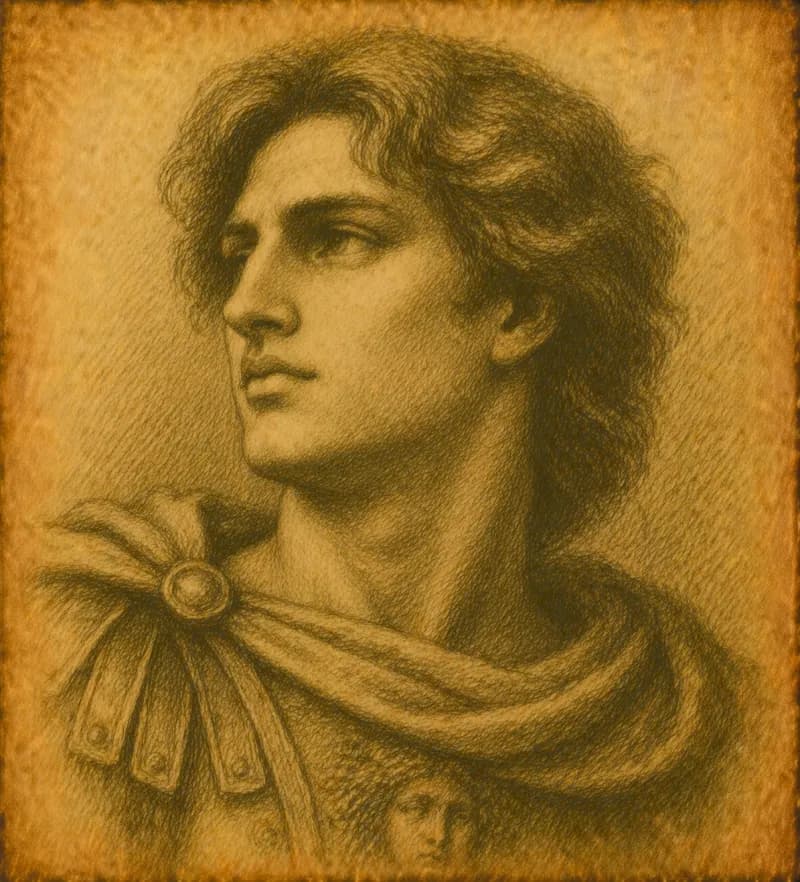
SECTION I -- SUBJECT PROFILE
| Name | Alexander the Great |
|---|---|
| English | Alexander the Great |
| Nationality | Greece |
| Lifespan | 356 BC-323 BC |
| Gender | Male |
| Century | BC |
| Field | Military |
| Title | King of Macedon & Conqueror |
SECTION II -- OVERVIEW
Alexander the Great was born in 356 BC in the Macedonian capital of Pella, the son of King Philip II, a brilliant and ambitious reformer who had turned Macedon into the dominant military power of the Greek world, and Queen Olympias, a fierce, strong-willed princess of Epirus devoted to the mystery cults of Dionysus.From infancy Olympias told her son that his true father was Zeus and that he was destined for glory.
The young prince showed his mettle early.Around the age of twelve he tamed the magnificent black stallion Bucephalus that no one else could ride, after noticing that the horse was frightened of its own shadow; his father, watching, wept and said, 'My son, seek a kingdom worthy of yourself, for Macedonia is too small for you.
' The first turning point came at thirteen, when Philip engaged none other than Aristotle to tutor his son for three years.In the groves of the sanctuary at Mieza, Alexander absorbed philosophy, medicine, geography, and above all the Iliad, carrying a copy annotated by Aristotle through his later campaigns and dreaming of rivaling Achilles.
When Philip was assassinated in 336 BC, the twenty-year-old Alexander inherited the throne and swiftly crushed revolts in Greece.The second turning point came when he launched the long-planned Persian invasion.
In three titanic battles, at the Granicus in 334 BC, Issus in 333 BC, and Gaugamela in 331 BC, he smashed the armies of the Great King Darius III, conquering a realm stretching from Asia Minor and Egypt to Mesopotamia and Persia itself.He founded dozens of cities named Alexandria, the most famous of which became the intellectual capital of the ancient world, and pushed on across the Hindu Kush and the Indus before his exhausted troops forced him to turn back.
He died mysteriously at Babylon in 323 BC at thirty-two.His empire fractured among his generals, but the Hellenistic world he left behind spread Greek language and culture from Egypt to India and set the stage for two centuries of cosmopolitan exchange.
SECTION III -- CHRONOLOGY
SECTION IV -- NOTABLE STATEMENTS
“There is nothing impossible to him who will try.”
“I am not afraid of an army of lions led by a sheep; I am afraid of an army of sheep led by a lion.”
SECTION V -- FIELD NOTES
[A]The Gordian Knot
When shown the Gordian Knot that legend said could only be untied by the future ruler of Asia, Alexander simply cut it with his sword - an act that has become a metaphor for solving intractable problems with bold action.
SECTION VI -- LEGACY & IMPACT
Alexander created one of the largest empires in history before the age of 33, spreading Greek culture from Egypt to India and inaugurating the Hellenistic age. The cities he founded, especially Alexandria in Egypt, became centers of learning and cultural exchange that shaped the ancient world for centuries. His military tactics are still studied at military academies today.
SECTION VII -- MAJOR WORKS
- [01]Conquest of the Persian Empire (334-330 BC)
- [02]Founding of Alexandria, Egypt (331 BC)
- [03]Battle of Gaugamela (331 BC)
- [04]Campaign into India (327-325 BC)
- [05]Spread of Hellenistic culture across three continents