SUBJECT FILE NO. IJM-0028
CLASSIFICATION: HISTORICAL ARCHIVE
Thomas Edison
Thomas Edison
Inventor & Businessman
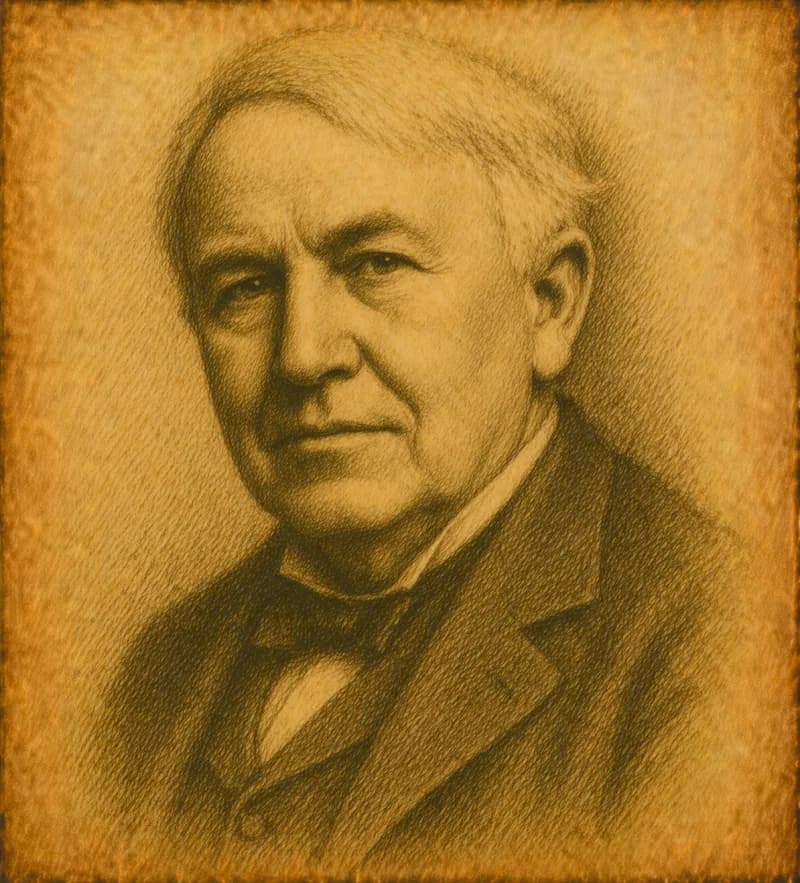
SECTION I -- SUBJECT PROFILE
| Name | Thomas Edison |
|---|---|
| English | Thomas Edison |
| Nationality | United States |
| Lifespan | 1847-1931 |
| Gender | Male |
| Century | 19th C. |
| Field | Science |
| Title | Inventor & Businessman |
SECTION II -- OVERVIEW
Thomas Alva Edison was born in 1847 in the small Ohio town of Milan, the seventh and youngest child of a struggling merchant and a former schoolteacher.A bout of scarlet fever and untreated ear infections in childhood left him progressively deaf, a condition he later insisted had helped him concentrate.
His formal schooling lasted only three months; a frustrated teacher called him 'addled,' and his mother, Nancy, indignantly pulled him out and taught him at home, feeding his curiosity with books on chemistry and natural philosophy.By twelve he had set up a small laboratory in the basement and was selling newspapers and candy on the Grand Trunk Railway.
The first turning point came when, at fifteen, Edison saved a stationmaster's son from being hit by a train.In gratitude the father taught him telegraphy, and for the next five years the young man drifted from town to town as a tramp telegrapher, perfecting his craft and filing his first patent for an electric vote recorder, which to his surprise found no buyers.
From then on he resolved to invent only things people wanted.He moved to New York, invented the stock ticker, and used the proceeds to build the world's first industrial research laboratory at Menlo Park, New Jersey, in 1876.
The second turning point came at Menlo Park, where his team of engineers, machinists, and glassblowers applied systematic trial and error on a scale never seen before.In 1877 he recited 'Mary Had a Little Lamb' into a diaphragm wrapped in tinfoil and astonished the world with the phonograph.
In 1879 he and his colleagues produced a long-lasting incandescent light bulb by testing thousands of filament materials, and in 1882 his Pearl Street Station in Manhattan lit up the first customers with centrally generated electricity.Motion pictures followed in 1891 with the kinetoscope.
Over his lifetime he was issued 1,093 U.S.patents.
He died in 1931 at eighty-four, and his 'invention factory' became the template for the modern industrial research lab.
SECTION III -- CHRONOLOGY
SECTION IV -- NOTABLE STATEMENTS
“Genius is one percent inspiration and ninety-nine percent perspiration.”
“I have not failed. I've just found 10,000 ways that won't work.”
SECTION V -- FIELD NOTES
[A]Deafness as an advantage
Edison was partially deaf from childhood, which he claimed actually helped him concentrate by blocking out distractions.
SECTION VI -- LEGACY & IMPACT
Edison's inventions created entire industries and fundamentally transformed daily life. The practical incandescent light bulb made electric illumination universal, his phonograph gave birth to the recorded music industry, and his motion picture camera launched the film industry. His Menlo Park laboratory established the model of organized industrial research that corporations follow to this day.
SECTION VII -- MAJOR WORKS
- [01]Practical incandescent light bulb (1879)
- [02]Phonograph (1877)
- [03]Motion picture camera / Kinetoscope (1891)
- [04]First commercial electrical power station, Pearl Street (1882)
- [05]Alkaline storage battery (1901)
SECTION VIII -- REFERENCE MATERIALS
SECTION IX -- LINKED SUBJECTS
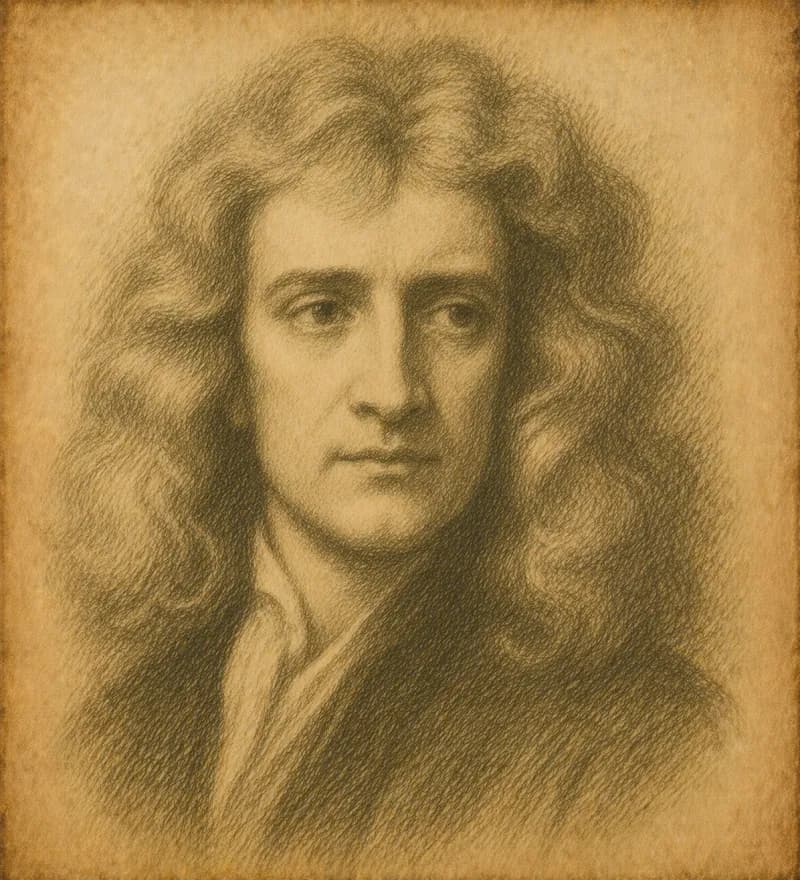
IJM-0009 / GBR
Isaac Newton
The giant who discovered universal gravitation
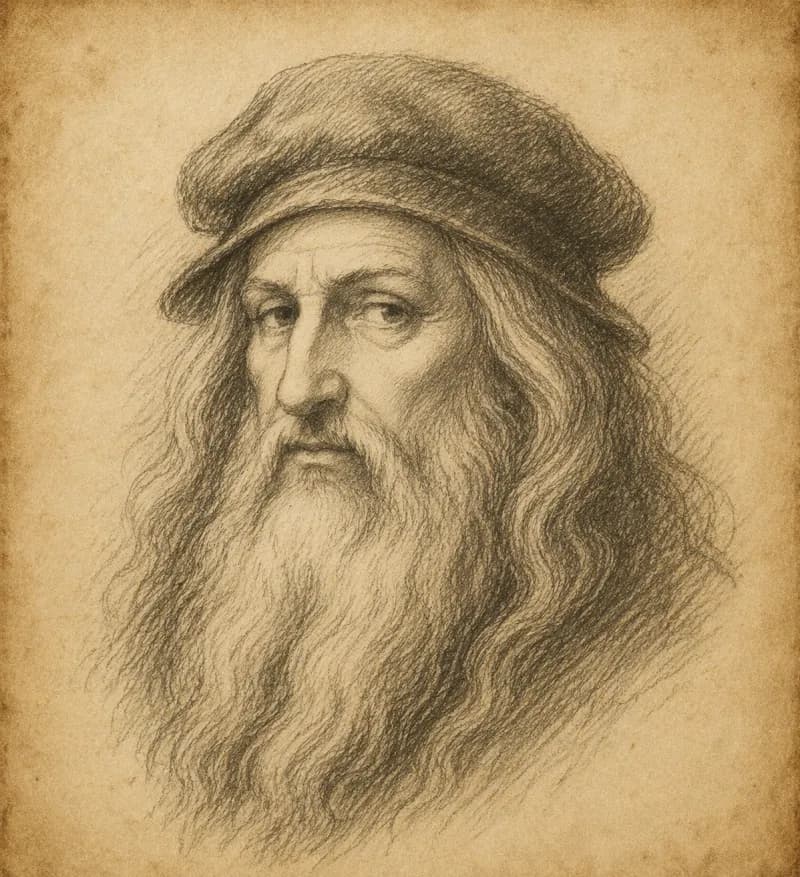
IJM-0001 / ITA
Leonardo da Vinci
The universal genius, embodiment of curiosity
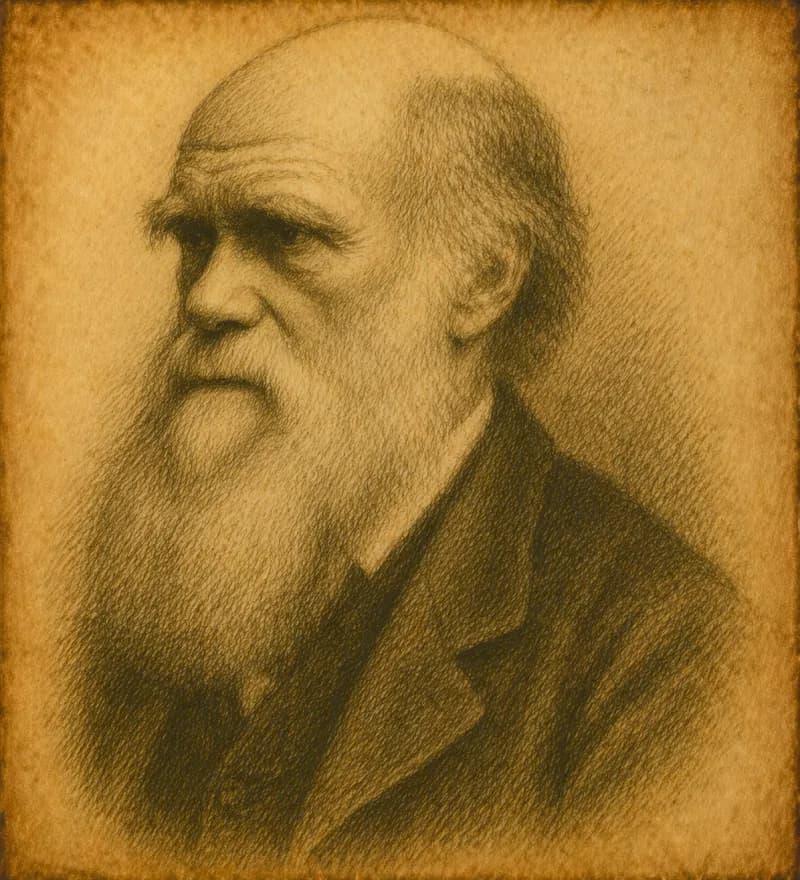
IJM-0024 / GBR
Charles Darwin
The naturalist who transformed our understanding of life
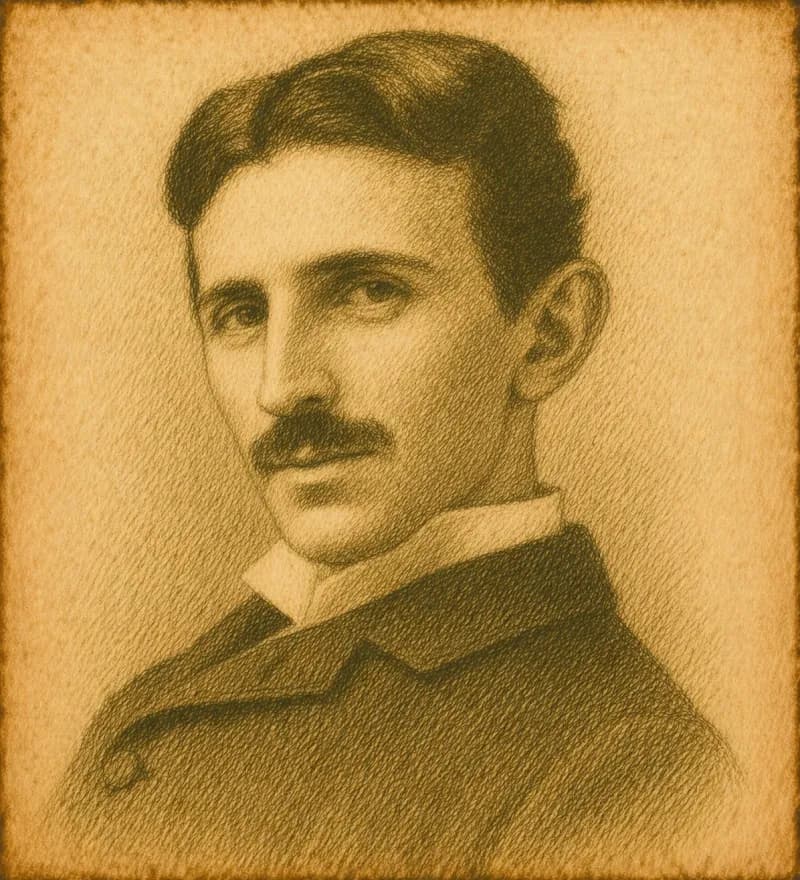
IJM-0034 / AUT
Nikola Tesla
The visionary inventor who lit the world with alternating current