SUBJECT FILE NO. IJM-0032
CLASSIFICATION: HISTORICAL ARCHIVE
Katsushika Hokusai
Katsushika Hokusai
Ukiyo-e Artist
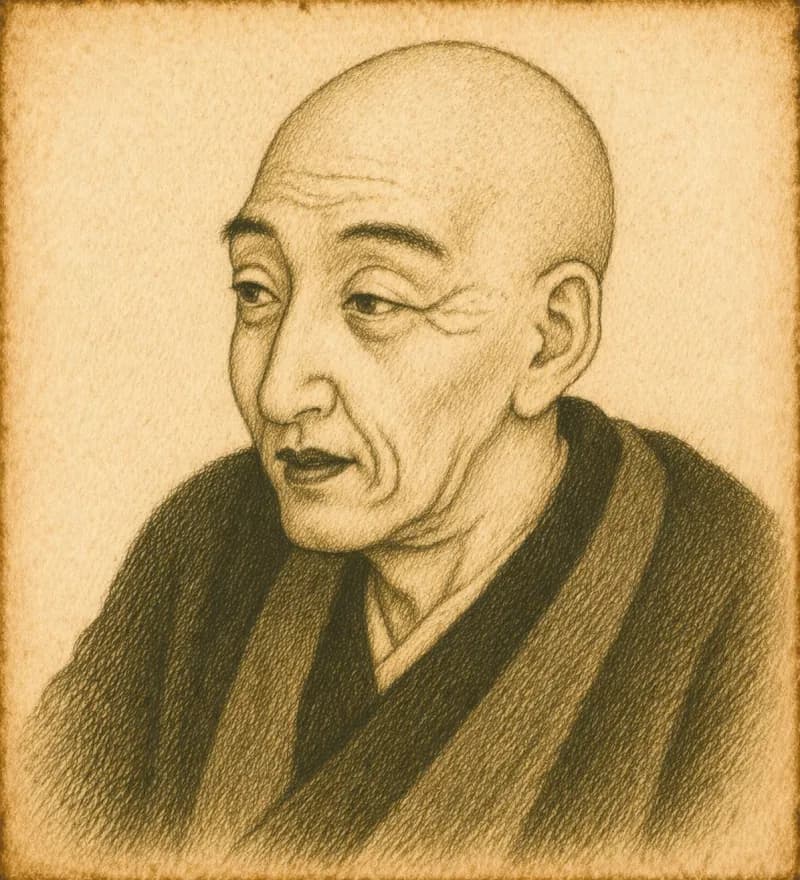
SECTION I -- SUBJECT PROFILE
| Name | Katsushika Hokusai |
|---|---|
| English | Katsushika Hokusai |
| Nationality | Japan |
| Lifespan | 1760-1849 |
| Gender | Male |
| Century | 19th C. |
| Field | Art |
| Title | Ukiyo-e Artist |
SECTION II -- OVERVIEW
Katsushika Hokusai was born in 1760 in the Honjo district of Edo, on the eastern bank of the Sumida River, probably to a family of artisans.He later claimed in his own words that he had 'loved drawing the shapes of things from the age of six.
' In his early teens he was apprenticed to a woodblock carver, an exacting craft that taught him the discipline of the printed line from the bottom up.The first turning point came at nineteen when he entered the studio of the leading ukiyo-e master Katsukawa Shunshō, a designer of kabuki actor portraits.
Taking the art name Shunrō, he established himself as a reliable print designer.But Shunshō's death and a quarrel with a senior student led to Hokusai's expulsion from the Katsukawa school in the mid-1790s, a humiliation that he later called the luckiest event of his life.
Cut loose from the guild, he began to study other schools with ferocious curiosity: the classical Kano tradition, the courtly Tosa school, Chinese painting manuals, and imported Dutch engravings from which he learned European perspective.Over his long life he would take more than thirty art names and move house nearly a hundred times, always restless for new styles.
The second turning point came in his seventies.Around 1831, when most artists would have retired, he published the woodblock series Thirty-six Views of Mount Fuji, whose images, including The Great Wave off Kanagawa and Fine Wind, Clear Morning, are among the most widely reproduced pictures ever made.
His Hokusai Manga, fifteen volumes of lightning sketches of birds, plants, gods, monsters, and everyday people, amounts to an encyclopedia in drawings.He continued working right up to his death in 1849 at eighty-eight, lamenting that if heaven had granted him another ten years, he might have become 'a truly great artist.
' Half a century later, Japanese prints smuggled into Europe as wrapping paper astonished Monet, Van Gogh, Degas, and Cassatt, sparking the wave of Japonisme that helped shape modern art.
SECTION III -- CHRONOLOGY
SECTION IV -- NOTABLE STATEMENTS
“From the age of six I had a mania for drawing.”
“If heaven gives me five more years, I will become a true artist.”
SECTION V -- FIELD NOTES
[A]30+ names and 93 moves
Hokusai changed his artist name over 30 times and moved house 93 times throughout his life, always seeking artistic renewal.
SECTION VI -- LEGACY & IMPACT
Hokusai's The Great Wave off Kanagawa is one of the most reproduced images in art history, and his work profoundly influenced Western Impressionism, including Monet, Van Gogh, and Degas. He demonstrated that printmaking could achieve the expressive power of painting and helped elevate ukiyo-e from popular craft to fine art. His Thirty-six Views of Mount Fuji established landscape as a major subject in Japanese art.
SECTION VII -- MAJOR WORKS
- [01]The Great Wave off Kanagawa (c.1831)
- [02]Thirty-six Views of Mount Fuji (1831-1833)
- [03]Hokusai Manga (15 volumes, 1814-1878)
- [04]Fine Wind, Clear Morning / Red Fuji (c.1831)
- [05]The Dream of the Fisherman's Wife (1814)