SUBJECT FILE NO. IJM-0047
CLASSIFICATION: HISTORICAL ARCHIVE
Benjamin Franklin
Benjamin Franklin
Founding Father, Scientist, Diplomat
SECTION I -- SUBJECT PROFILE
| Name | Benjamin Franklin |
|---|---|
| English | Benjamin Franklin |
| Nationality | United States |
| Lifespan | 1706–1790 |
| Gender | Male |
| Century | 16th–18th C. |
| Field | Politics |
| Title | Founding Father, Scientist, Diplomat |
SECTION II -- OVERVIEW
Benjamin Franklin was born in 1706 in Boston, the fifteenth child and tenth son of a soap and candle maker who had emigrated from England in search of religious freedom.His parents could afford only two years of schooling for him, and at twelve he was apprenticed to his older brother James, a printer who published one of Boston's earliest independent newspapers.
The first turning point came when the teenaged Ben, forbidden to write for his brother's paper, smuggled in essays under the pseudonym Silence Dogood, only to be beaten when his authorship was discovered.In 1723 he ran away from his indenture, arriving penniless in Philadelphia with three puffy rolls under his arm, an image he would later immortalize in his autobiography.
Within six years he owned his own press and was publishing the Pennsylvania Gazette, and in 1732 he launched Poor Richard's Almanack, whose homespun proverbs carried his voice into every farmhouse in the colonies.By forty he was wealthy enough to retire from the printing trade and devote himself to his twin passions, science and civic improvement.
His second turning point came in 1752, when his famous kite experiment demonstrated that lightning was a form of electricity and won him the Royal Society's Copley Medal and international fame.He invented the lightning rod, the Franklin stove, bifocal glasses, and a flexible urinary catheter, refusing to patent any of them because he believed useful knowledge should belong to all.
He founded Philadelphia's first public library, its first fire department, and the American Philosophical Society.In his later years he turned to politics: a colonial agent in London, a delegate to the Second Continental Congress, a signer of the Declaration of Independence in 1776, and then, from 1778, the revolutionary republic's ambassador to Paris, where his fur cap and plain speech conquered French society and secured the alliance that won the war.
He returned home to serve as the oldest delegate to the Constitutional Convention of 1787, and died in Philadelphia in 1790 at the age of eighty-four, mourned by two nations.
SECTION III -- CHRONOLOGY
SECTION IV -- NOTABLE STATEMENTS
“An investment in knowledge pays the best interest.”
“Tell me and I forget. Teach me and I remember. Involve me and I learn.”
SECTION V -- FIELD NOTES
[A]A kite that nearly killed him
Franklin's 1752 kite experiment carried real danger. He survived because he stood on dry ground under a shed and touched only a metal key tied to a dry silk ribbon. The Russian scientist Georg Wilhelm Richmann, who attempted to repeat the experiment in 1753, was killed by a bolt of ball lightning.
SECTION VI -- LEGACY & IMPACT
Franklin shaped the American identity through his writing, his science, and his diplomacy. He founded the first public library, fire department, and postal system in America, and his electrical experiments and practical inventions spread his name across the Atlantic world.
SECTION VII -- MAJOR WORKS
- [01]Declaration of Independence (1776)
- [02]Poor Richard's Almanack (1732-1758)
- [03]Kite experiment (1752)
- [04]Bifocal glasses (1784)
- [05]Franklin stove (1742)
SECTION VIII -- REFERENCE MATERIALS
SECTION IX -- LINKED SUBJECTS
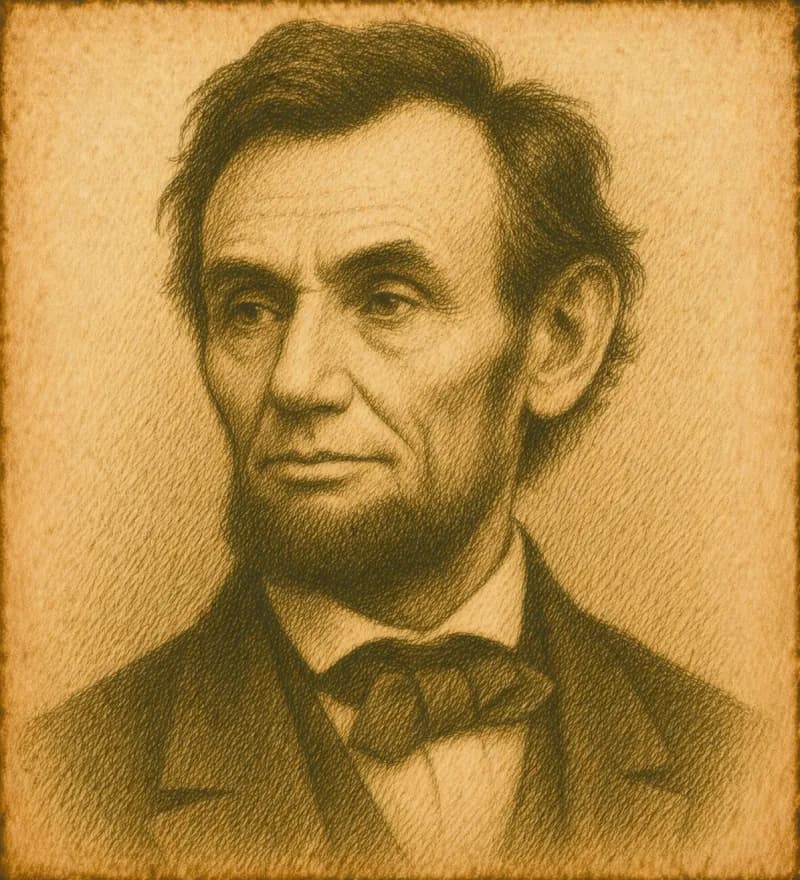
IJM-0036 / USA
Abraham Lincoln
The president who preserved the Union and abolished slavery
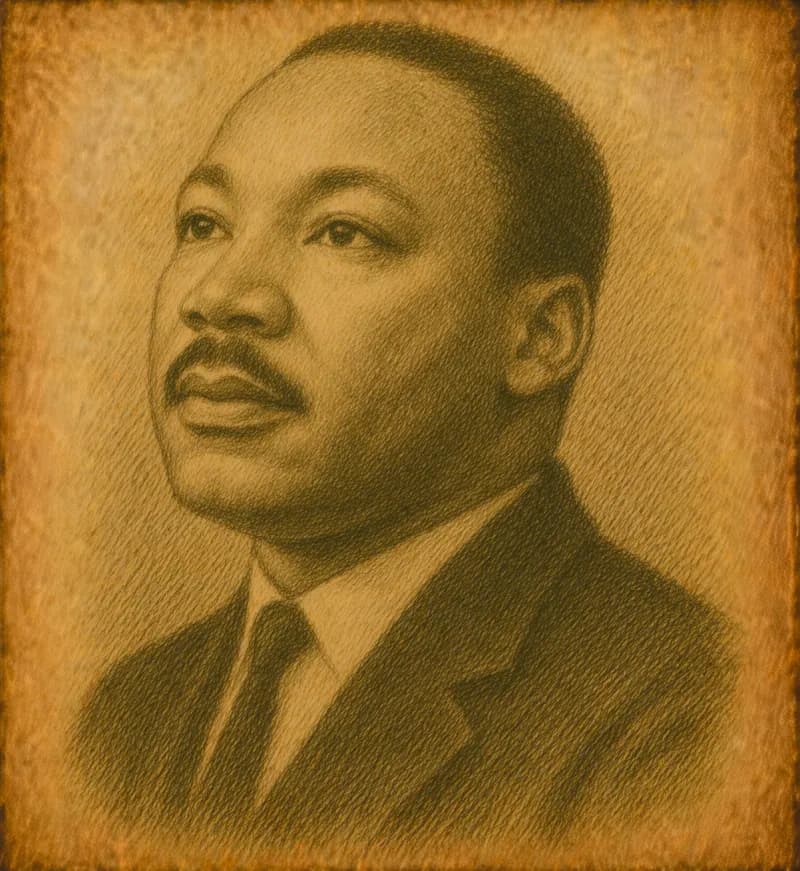
IJM-0021 / USA
Martin Luther King Jr.
The dreamer who led the civil rights movement
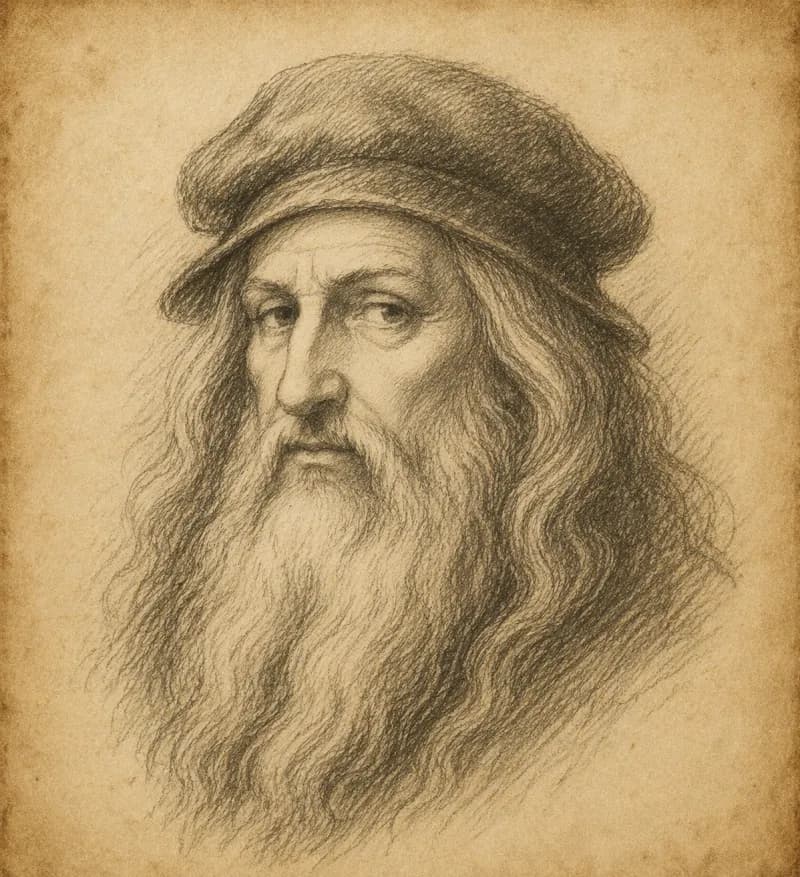
IJM-0001 / ITA
Leonardo da Vinci
The universal genius, embodiment of curiosity
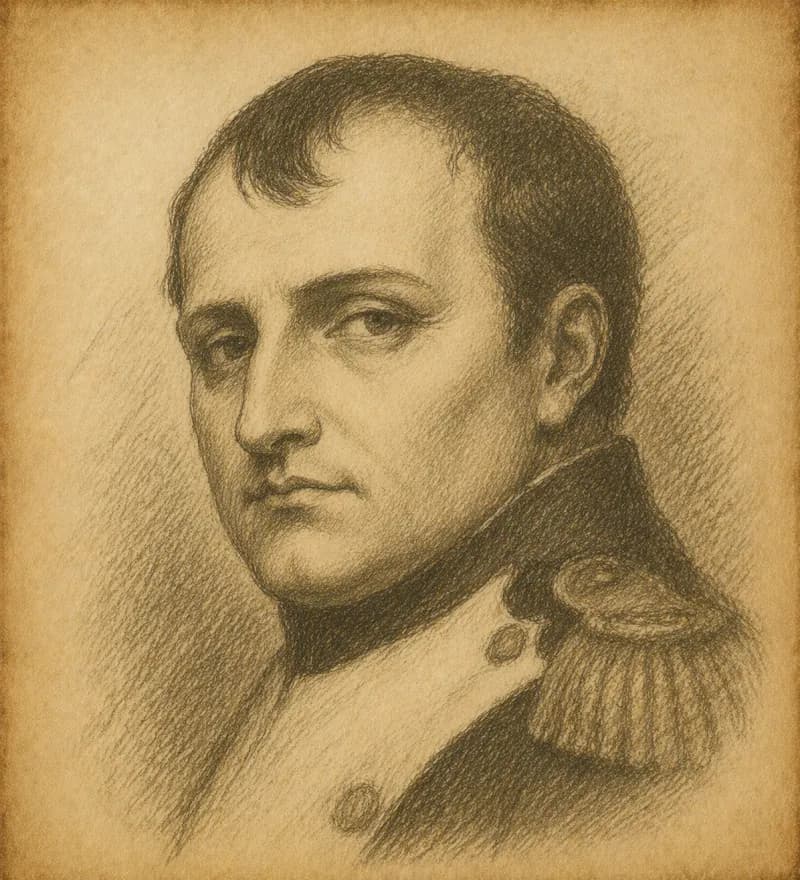
IJM-0005 / FRA
Napoleon Bonaparte
The hero who swept across Europe